I am learning flutter from JustAcademy, They provide very much great environment where people gather and work simultaneously. totally project based training institute.
MOHD ABU BAKAR ANSARI
Flutter Developer
Awesome Experience. I am a Front-end Web Designer working at Star India for 3 years now. I applied for Full-stack development and my experience has been phenomenal & they really do help with placements exceptionally. Thank you Roshan sir so much.
How the Django framework really works, and how live, instructor led, mentor led training helps you become a confident Django developer
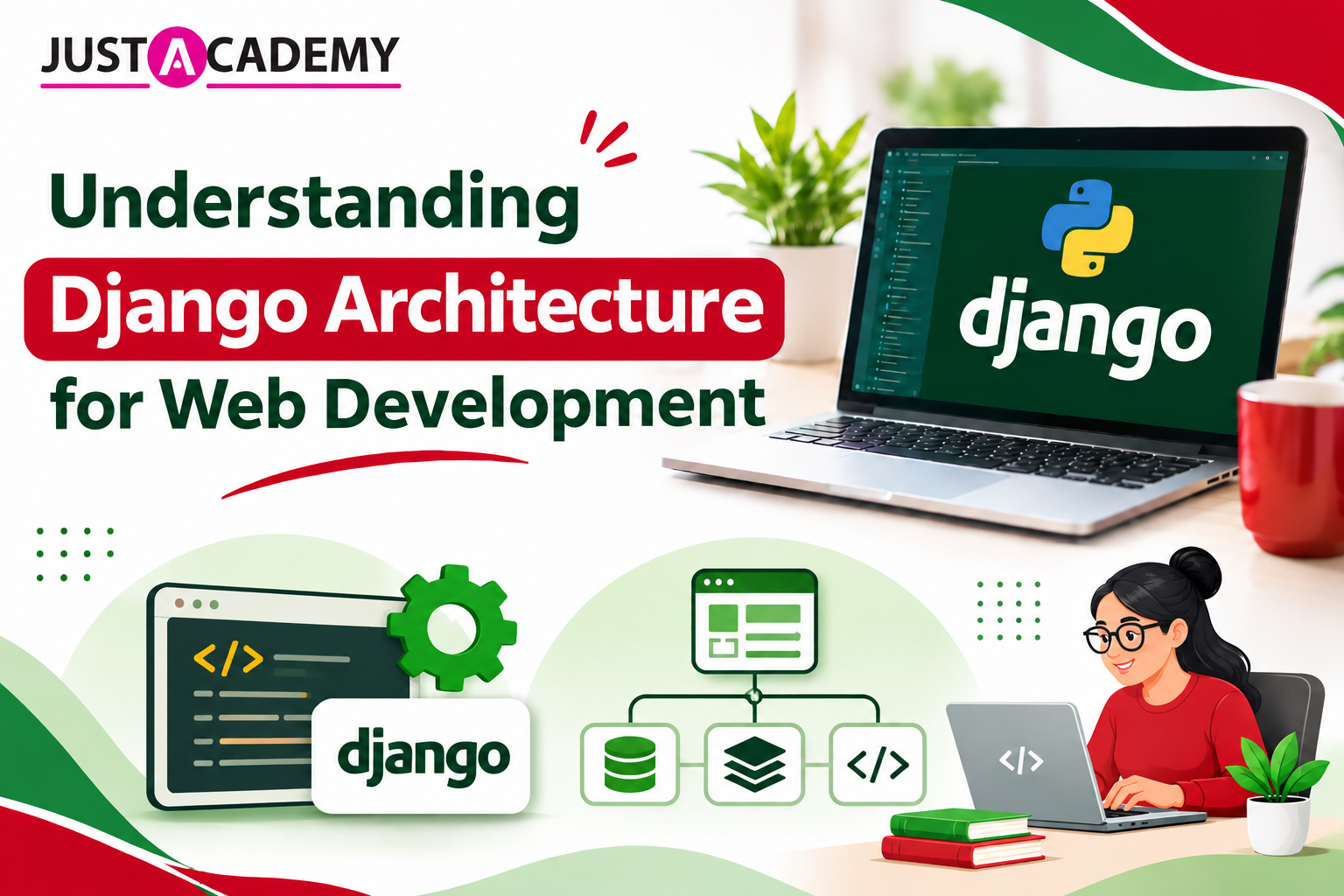
If you have spent any time around Hyderabad’s tech crowd, whether in Hitech City, Gachibowli or a late evening chai spot near Madhapur, you have probably heard someone say they are “doing Django.” This django tutorial begins with a simple promise. By the end, you will understand why the Django framework is shaped the way it is, how its architecture holds a website together, and how to learn it without wasting months jumping between random videos.
Here is the honest part. Most people do not struggle with Django because it is hard. They struggle because nobody explained the big picture first. If you are new to the language, a structured Python course in Hyderabad gives you the foundation Django quietly assumes you already have. And if you would like to watch a live class before committing to anything, you can register for a free demo session and see how an instructor led, mentor led session feels in practice.
This guide is written for people in Hyderabad who want a clear and unhurried explanation. We will walk through the logic of Django architecture, set up a working project, follow a request from the browser to the database, connect Django to a React frontend, and talk about deployment. Along the way, we will also be honest about how you should study, because the way you learn matters as much as what you learn.
Why Django Keeps Earning Respect in Hyderabad’s Job Market
Hyderabad runs on software. Product companies, service firms, fintech teams and a growing startup scene all need people who can ship working web applications quickly. Django sits comfortably in the middle of that need. It is a Python framework that comes with most of what a serious website requires, and that is exactly why so many teams keep choosing it.
What the Django Web Framework Actually Gives You
The Django web framework follows a philosophy of “batteries included.” Instead of asking you to hunt for a separate library for every small task, it ships with user authentication, an admin panel, form handling, a database layer, security protections and a templating system. You do not assemble a car from loose parts. You get a vehicle that already starts, and you decide where it goes.
For a beginner, this is a gift. You spend your energy on understanding your application rather than wrestling with compatibility between a dozen packages. For a working django developer, it means faster delivery and fewer surprises when a project grows. That combination of speed and stability explains why Django powers everything from small business websites to large content platforms.
Why Python and Django Are a Natural Pair
Django is written in Python, which means everything you already know about the language carries over directly. Lists, dictionaries, functions, classes and modules all appear in your Django code exactly as you learned them. There is no second language to pick up just to get a page on the screen.
This is why the phrase “python and django” shows up so often in job descriptions. Employers see Python as the general skill and Django as the proof that you can apply it to real web problems. If your Python basics feel shaky, fix that first. A rushed jump into a framework without the language underneath is the most common reason learners stall in week three.
How Hiring Managers Read a Django Skill Set
When a recruiter in Hyderabad scans a resume for a python django developer, they are rarely looking for someone who memorised settings. They want evidence that you can build a small django website, explain how its parts talk to each other, and debug something when it breaks. A learner who can speak clearly about architecture stands out immediately, because most candidates can only describe what they typed.
This is also why understanding the structure matters more than collecting certificates. A well explained project beats a long list of tools every single time.
Reading the Django Blueprint Before You Write a Single Line
Before touching your keyboard, spend a little time on the blueprint. Architecture sounds like a heavy word, but in Django it is really just a tidy way of deciding who is responsible for what. Once that clicks, almost every error message starts to make sense.
Django Framework Architecture in Plain Language
Think of a restaurant. The waiter takes your order, the kitchen prepares the food, the pantry stores the ingredients and the plating makes it look presentable. Nobody does everyone else’s job. Django framework architecture works the same way. Each part has a clear role, and the parts pass work to each other in a predictable order.
When a visitor opens your website, Django receives the request, decides which piece of code should handle it, fetches any data that is needed, and then builds a response the browser can display. Everything you write fits into one of those stages. That is the entire secret, and it is a surprisingly small idea.
Django MVT Architecture Explained Simply
Django follows a pattern called MVT, which stands for Model, View and Template. The model describes your data and talks to the database. The view contains the logic that decides what should happen. The template controls how the result looks in the browser. This is the django mvt architecture in one breath.
There is also a quiet fourth player, the URL configuration, which acts like a receptionist pointing every incoming request toward the right view. Beginners often forget this part and wonder why their page does not load. When something fails, ask yourself which of the four pieces is responsible, and you will find the problem much faster.
Django MVC and Why the Names Confuse Everyone
Many learners arrive from other ecosystems and ask about django mvc. The classic MVC pattern splits an application into Model, View and Controller. Django does something similar but names things differently, and that naming difference creates endless confusion in interviews.
In Django, what MVC calls the controller is largely handled by the framework itself together with your views, while what MVC calls the view is the Django template. The table below keeps the comparison clear.
Concept
Classic MVC
Django MVT
Data layer
Model
Model
Logic layer
Controller
View
Presentation layer
View
Template
Routing
Often handled by the controller
URL configuration plus the framework
Remember this table the next time an interviewer asks about it. A calm, correct answer here signals real understanding.
Setting Up Your Workspace the Right Way
A tidy setup saves you hours later. Most beginners rush this part and then lose an afternoon to version conflicts or missing packages. Let us do it slowly and properly.
Installing Django Without Headaches
Installing django begins with having a recent version of Python on your machine. Once that is ready, create a virtual environment so that your project’s packages stay separate from everything else on your laptop. Then use pip to install Django inside that environment, with a simple pip install django command.
The virtual environment step feels optional when you are excited, but it is one of the habits that separates hobbyists from professionals. Every serious project you will ever join uses one. Get comfortable with it now, and you will never be the person who breaks a teammate’s machine.
Django Setup and Your First Project
With Django installed, you create a new project using the startproject command from Django’s admin utility. This generates a folder with a few files, including a settings file, a URL configuration file and an entry point for running the server. Start the development server, open the local address in your browser, and you will see Django’s welcome page.
That small rocket ship moment matters more than it looks. It confirms that your django setup works end to end, and it gives you a safe starting point to experiment from. If you are looking for ideas on what to build next, this list of Python projects for beginners to build a developer portfolio can help you pick something worth showing to employers.
Understanding the Files Django Hands You
Many people copy code without reading the generated files. Please do not. The settings file controls your database, installed apps, middleware and security options. The URL file maps addresses to views. The manage script is your command centre for running the server, creating apps and applying database changes.
Think of the django frame as the skeleton of your website. Every new feature you add grows around this skeleton, so knowing where each bone sits makes the rest of your learning far less mysterious.
Following One Request From the Browser to the Database
This is the part where the architecture stops being a diagram and becomes a story. Follow a single request, and the whole framework reveals itself.
The URL Dispatcher and the View
A visitor types an address or clicks a link. Django looks at the URL patterns you have defined and finds the first one that matches. That pattern points to a view, which is simply a Python function or class that receives the request and returns a response.
Inside the view, you decide what happens. You might fetch a list of products, check whether the user is logged in, or process a submitted form. Views are where your logic lives, so this is where you will spend much of your time as a django developer. Keep them focused, and your code stays easy to read.
Models and the ORM
When a view needs data, it talks to a model. A model is a Python class that describes a table in your database, with each attribute representing a column. Django’s object relational mapper, usually called the ORM, lets you create, read, update and delete records using Python instead of raw SQL.
This is one of the reasons the django web development experience feels smooth. You change a model, run a migration, and the database updates to match. You still need to understand SQL concepts, because the ORM does not replace that knowledge, but it removes a large amount of repetitive work.
Templates and the Final Response
Once the view has its data, it hands that data to a template. Templates are text files, mostly HTML, with special placeholders where Django fills in dynamic content. They support loops, conditions and inheritance, so you can build a base layout once and reuse it across your entire django website.
The finished page travels back to the browser, and the visitor sees the result. All of this happens in a fraction of a second. If you ever feel lost while debugging, replay this journey in your head: URL, view, model, template, response. The bug is hiding in one of those five steps.
Building a Real Django App Inside Your Project
Here is a distinction that trips up almost every beginner. A project and an app are not the same thing, and understanding the difference makes your code far more organised.
What an App in Django Really Means
A project is the whole website. An app in django is a self contained piece of functionality inside that website, such as a blog, a payment module or a user profile system. One project can contain many apps, and a well designed app can often be reused in another project with very little change.
This modular thinking is one of Django’s best ideas. It encourages you to divide work into logical chunks, which keeps teams from stepping on each other’s toes. When you create your first django app, give it a single clear purpose and resist the urge to cram everything inside.
Designing a Small Django App Step by Step
Imagine you are building a simple notes application. You create an app called notes, define a model for a note with a title and body, write a view that lists all notes, add a URL pattern for it, and create a template to display them. That is the complete cycle in miniature.
Repeat that cycle with a form for adding new notes, and you have covered create and read operations. Add edit and delete, and you have the full set. A small project like this teaches more than ten hours of passive watching, because every piece of the architecture appears in a context you can touch.
The Admin Panel as a Free Superpower
One of the most delightful things about Django is its automatic admin interface. Register your models, create a superuser, and you instantly get a clean dashboard for managing your data. Clients love seeing this, and it saves you from building a management screen from scratch.
If you want to see how a trainer builds all of this live and answers questions as they come up, it is worth attending a free demo class before you decide how to learn.
Where Django Meets React and the Rest of Your Stack
Modern websites rarely stop at server rendered pages. Teams want fast, interactive interfaces, and that is where Django joins forces with a JavaScript frontend.
Django REST Framework for Building APIs
The django rest framework extends Django so that your application can serve data as JSON instead of finished web pages. You define serializers that convert your models into a format other programs can read, and then you create API views that expose that data at clean endpoints.
Many learners hear the phrases django rest and django rest framework and assume they are two different things. They are not. The shorter phrase is simply how people casually refer to the same toolkit. Learning it turns you from someone who builds websites into someone who builds services that any frontend or mobile app can use.
Django React as a Practical Combination
Pairing django react is a popular choice because each side does what it does best. Django handles data, security and business rules. React handles the interface, reacting instantly to clicks and updates without reloading the page. The two communicate through the API you built with the REST framework.
Any real application needs to know who is using it and what they are allowed to do. Django provides a mature authentication system, and the REST framework adds token and session based options suited for APIs. Permissions let you restrict certain actions to certain users.
Take this topic seriously. Security mistakes are the ones that hurt reputations. Understanding how django software handles logins, passwords and permissions gives you a solid advantage over candidates who treat security as an afterthought.
Deployment, Security and the Habits Employers Notice
Writing code on your laptop is one thing. Putting it in front of real users is another. This stage separates people who finish tutorials from people who deliver products.
Harness Deployment and Release Thinking
Modern teams rarely upload files by hand. They use automated pipelines that test code, package it and release it with minimal human effort. Tools such as Harness are part of that world, and the phrase harness deployment refers to using a continuous delivery platform to push releases safely and repeatably.
You do not need to become a DevOps specialist to be a good django developer. But understanding the idea of automated, repeatable releases will make you far more valuable in a team. Even a basic grasp of how code moves from your repository to a live server shows maturity.
Security Defaults Worth Knowing
Django protects you from many common attacks by default, including cross site scripting, cross site request forgery and SQL injection. These protections only work if you use the framework the way it expects. Disabling them to save time is a mistake that appears in far too many beginner projects.
Keep your secret keys out of your code, turn off debug mode in production, and keep dependencies updated. These are small habits, yet they are exactly what experienced reviewers check first when they look at your work.
Testing as a Professional Habit
Django includes a testing framework that lets you verify your models, views and forms automatically. Writing tests feels slow at first, then suddenly becomes the thing that lets you change code without fear.
If you add even a handful of sensible tests to your portfolio project, interviewers notice. It tells them you think about reliability, not just features. That attitude is hard to teach later, so start building it now.
Why Live Mentor Led Training Changes How You Learn Django
Now let us talk about something that rarely appears in a technical tutorial: how you should actually learn. This section matters because the same content can produce a confident developer or a confused one, depending on the learning style.
Instructor Led Sessions That Keep You Moving
In an instructor led session, someone experienced explains concepts in the right order, shows you where beginners usually go wrong, and adjusts the pace when the room looks confused. You can ask a question the moment it appears, and you get an answer that fits your exact situation.
Recorded videos cannot do that. They are wonderful for revision, but they cannot notice that you misunderstood a concept ten minutes ago. Live interactive sessions bring human judgement into the process, and that is hard to replace.
Mentor Led Guidance for Real Projects
A mentor does something different from an instructor. Where an instructor teaches a subject, a mentor looks at your progress, your confusion and your goals, and then helps you make decisions. They review your code, point out weak spots and push you to explain your thinking out loud.
This kind of mentor led support is especially valuable for Hyderabad learners who are switching careers or trying to move up from support or testing roles into development. It builds the confidence that comes from having someone check your work honestly.
Comparing the Ways People Learn
Different methods suit different people, but the trade offs are worth seeing clearly.
Factor
Self study
Recorded course
Live instructor and mentor led
Doubt resolution
Slow, depends on forums
Limited or delayed
Immediate and personal
Accountability
Very low
Low
High
Project feedback
Rare
Rare
Regular and detailed
Pace control
Fully yours
Fully yours
Guided with flexibility
Interview preparation
Mostly your own effort
Generic
Tailored and practised
If your goal is a job rather than a certificate, the right column usually wins. For a sense of how credentials fit into the picture, this guide on which Python certification boosts your career in 2026 helps you decide what is worth pursuing.
Why Structured Training at JustAcademy Makes the Difference
Learning alone can work, but it is slow and lonely. JustAcademy is a Mumbai based, ISO certified technology training institute with branches in Mumbai and Pune, and it delivers live interactive online courses to learners across India, including Hyderabad. Many students describe it as the best course in Mumbai for Python and web development, and the same teaching style now reaches you wherever you log in from.
Live Interactive Sessions with Real Interaction
The sessions are designed around conversation, not lectures. You code along, ask questions during the class, and receive answers while the topic is fresh. The curriculum for a python and django course is arranged so each concept builds on the last, which prevents the gaps that make self learners feel stuck.
Because classes run live, you also learn the soft skills of technical work, such as explaining your approach and reading someone else’s code. These are the things interviews quietly test.
Placement Support That Goes Beyond a Promise
Training only matters if it leads somewhere. JustAcademy offers placement support, including resume guidance, mock interviews and help with presenting your projects. The goal is to make you genuinely ready, not just to hand you a certificate.
If you want the full stack route, the Full Stack Developer Pro Bootcamp covers frontend, backend and deployment in one job oriented programme. If you prefer the JavaScript centred path, the MERN Stack Developer Bootcamp is built around MongoDB, Express, React and Node, with placement support included.
Mumbai Classroom and Global Online Options
If you ever visit Mumbai or Pune, classroom training is available at the institute’s branches. For everyone else, including learners in Hyderabad, the live online format delivers the same curriculum with the same instructor and mentor interaction. You can also download the course brochure to compare modules, duration and outcomes at your own pace.
A Practical Plan to Learn Django Without Burning Out
Knowing what to learn is only half the battle. Knowing in what order, and how much per week, makes the difference between momentum and quitting.
Weeks One and Two: Python Strength and Core Concepts
Spend the first stretch making sure your Python is solid. Focus on functions, classes, file handling and working with modules. Then read about how the web works, covering requests, responses and status codes. Without this, Django will feel like magic, and magic is exactly what you do not want while learning.
Install Django, run the development server, and read every file it generates. This early curiosity pays back many times over.
Weeks Three and Four: Build and Break Things
Now build the notes application described earlier. Add authentication, then add a second app. Break things on purpose and read the error messages carefully, because every error is a free lesson.
Use this phase to learn django properly through repetition. Build the same small project twice, the second time without looking at your first attempt. The gaps in your memory show you exactly what to revise.
Weeks Five and Six: APIs, React and Deployment
Add the django rest framework to expose your data through an API, and then connect a simple React interface. Finally, deploy your project somewhere live so that you can share a real link. A deployed project is worth far more than one that exists only on your laptop.
At this point, you have a portfolio piece, a story to tell in interviews, and a clear sense of how the python with django framework fits into a complete application.
Common Mistakes Hyderabad Learners Make with Django
Everyone makes mistakes while learning. The useful ones are those you can avoid because someone told you in advance.
Skipping Fundamentals to Chase Frameworks
The most common error is jumping into a framework before the language is comfortable. People copy tutorial code, it works, and they feel progress. Then a small change breaks everything, and they have no idea why. Strong Python basics make Django feel logical rather than mysterious.
Collecting Tutorials Instead of Building Projects
It is easy to watch ten tutorials and feel productive. It is much harder to start from a blank file and build something yourself. Employers hire people who can build, so shift your balance toward practice as early as you can.
Ignoring Architecture While Memorising Syntax
Syntax can be looked up in seconds. Understanding why a request flows through URLs, views, models and templates cannot. Candidates who explain framework django python architecture clearly in interviews almost always leave a stronger impression than those who recite commands.
Conclusion
Django rewards patient learners. Its architecture is not complicated once you see the flow: a request enters, the URL configuration finds the right view, the view talks to models, the template shapes the response, and the browser displays the result. Add the REST framework, a React frontend and a sensible deployment habit, and you have the skills many Hyderabad employers actively look for.
Equally important is how you learn. Live interactive sessions, instructor led teaching and mentor led feedback shorten the path from confusion to confidence, and structured training with placement support turns that confidence into opportunities. Whether you start with the language basics or jump straight into a full stack programme, take the first step today and let a real mentor guide you through the rest.
A practical look at instructor led and mentor led live interactive sessions, and how learners in Hyderabad can get classroom quality teaching without leaving the city
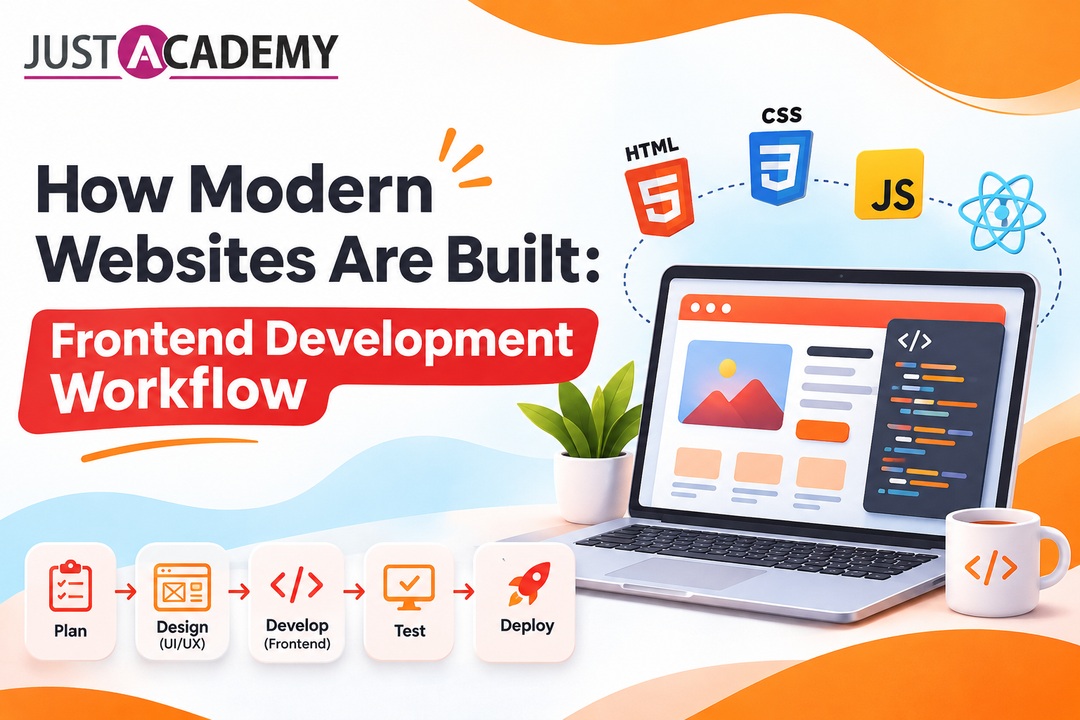
A practical walk through every stage of website development, written for Hyderabad learners who want to think and code like working front end engineers
A mentor style breakdown of React, Vue and Angular for Hyderabad learners, covering market share, hiring demand, learning curve and the smartest way to train.
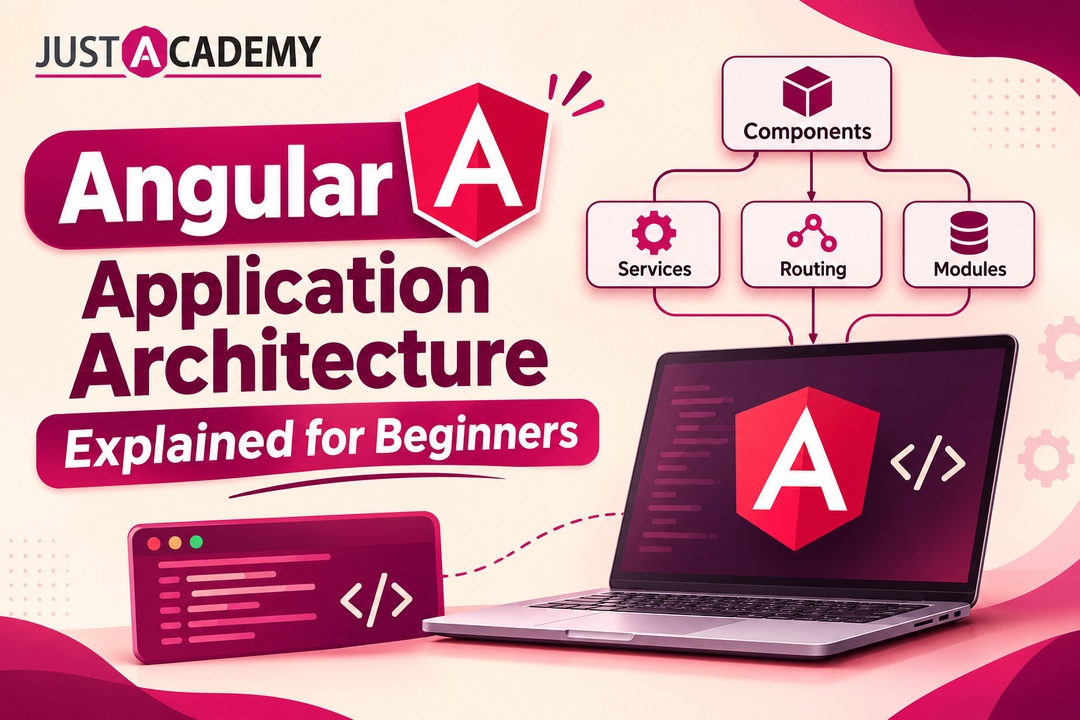
How components, services, standalone building blocks and the Angular CLI fit together, explained in plain words with live interactive and mentor led learning in mind
A practical guide for Hyderabad developers to react hooks, custom hooks and the design patterns that keep real projects clean, taught through live interactive, instructor led and mentor led learning
A practical, honest guide to choosing your first language, understanding modern iOS development, and building a career in Hyderabad’s growing app ecosystem through live interactive, instructor led and mentor led training.
A Hyderabad friendly walkthrough of how real apps get planned, designed, built, tested and shipped, and how live interactive, instructor led and mentor led learning gets you there faster
Drop us a Query
+91 99871 84296
Available 24x7 for your queries
Want To Connect with us
🚀 Kickstart Your IT Career
with JustAcademy
Learn Industry-Focused Courses with Live Projects & Placement Assistance
Full Stack Java(Java, Spring Boot, Hibernate, REST API, React JS)
Data Analytics(Excel, SQL, Power BI, Python, Tableau)